
Functional Medicine
Lyme Disease Treatment
You were treated for Lyme. The antibiotics are done. But you still feel terrible. Fatigue, joint pain, brain fog, neurological symptoms. Standard testing misses chronic Lyme and co-infections. We use advanced diagnostics to find what's still driving your symptoms.

Why Lyme Disease Gets Missed So Often
Lyme disease is caused by Borrelia burgdorferi, a spirochete bacteria transmitted by infected blacklegged (deer) ticks. In Maine and New Hampshire, it's endemic. You probably know someone who's had it. What most people don't know is how often it gets missed, misdiagnosed, or inadequately treated.
The standard diagnostic path looks like this: you go to urgent care or your primary care doctor. They run a Western blot or ELISA test. If it comes back negative, they tell you that you don't have Lyme. End of story.
Here's the problem. Borrelia burgdorferi uses multiple strategies to hide from your immune system. It can essentially make itself invisible to your body's immune response. Western blot and ELISA tests detect antibodies, which means they're looking for your immune system's reaction to the bacteria. If the bacteria is hiding and your immune system doesn't know it's there, the test comes back negative. But the infection is still present.
This is not speculation. It's well documented in the infectious disease literature. The spirochete evades and suppresses the host immune response. Colin Renaud (DC, PA-C), one of our providers and a member of ILADS (International Lyme and Associated Diseases Society), has spoken at ILADS conferences on this exact issue.
The other major problem is co-infections. Lyme is rarely just Lyme. Ticks carry multiple infections simultaneously. Bartonella is a bacterial co-infection transmissible by ticks, cats, dogs, and lice. Babesia is a blood parasite (not a bacteria) that requires completely different treatment than Lyme. Mycoplasma is another common co-infection. A standard Western blot tests for one species of Borrelia only. It misses all co-infections. It misses other Borrelia species. So even a positive result gives you an incomplete picture, and a negative result tells you almost nothing.
The most common way Lyme is transmitted is by nymph ticks. These are the baby ticks. They're roughly the size of a ballpoint pen dot on a piece of paper. If one attaches in your hair, behind your ear, or on your back, you may never know it was there. No tick bite memory. No bullseye rash (which is absent in many cases). Just a slow progression of symptoms over months or years: fatigue, brain fog, joint pain that migrates from place to place, neurological issues, anxiety, depression. And because the symptoms look like a dozen other conditions, patients get shuffled from specialist to specialist with no answers.
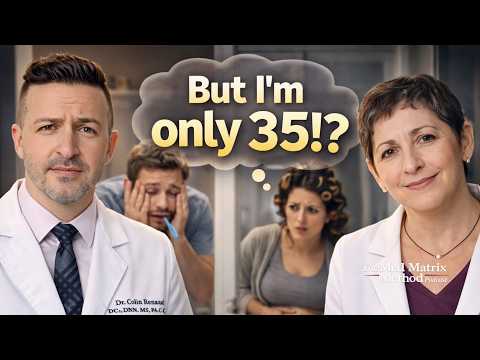
“The spyrochete basically Harry Potter's itself with an invisibility cloak from your immune system. Your immune system doesn't even know it's there. So when the conventional test is done in this situation, the test is useless.”
Colin Renaud, DC, PA-C: Standard Testing Is Useless When the Bacteria Hides
Provider Insight
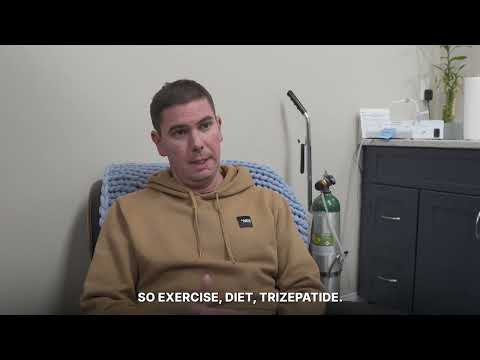
“I was thrilled to be able to incorporate it more consistently into my recovery program. It's just so convenient to have it so nearby.”
Lean: Ozone Therapy Enhanced Lyme Recovery
Patient Story
Inside Med Matrix
Everything Under One Roof
Advanced testing, personalized protocols, and real results from a team that treats the whole picture.

4.9
from 150+ Google Reviews
How We Test for Lyme and Co-Infections
The gold standard for Lyme diagnosis is not the Western blot. It's FISH testing (fluorescent microscopy). A blood smear is examined under a microscope by a specialized pathologist looking for the bacteria directly attached to red blood cells. This is the same type of microscopy analysis used in hospitals for pneumonia and sepsis. For some reason, it's almost never used for Lyme in conventional medicine.
FISH testing is available through specialized labs like Igenix and Tea Lab. It is expensive and not covered by insurance. But it provides answers that no antibody test can. And it can detect infection that's been present for decades, as long as the bacteria is still attached to the red blood cells.
For co-infections, we use separate testing panels for Bartonella, Babesia, Mycoplasma, and other tick-borne organisms. Because FISH technology is still advancing for all species, we sometimes use a combination of methodologies (PCR, antibody panels, and fluorescent microscopy) to build the most complete picture possible.
What we assess on your first visit:
- Roughly 100 biomarkers via blood panel (hormones, thyroid, inflammatory markers, nutrient levels, metabolic health)
- InBody 770 body composition scan
- Full health history with detailed symptom timeline
- Tick exposure history, geographic history, animal exposure
- History of prior Lyme treatment and response
When Lyme or tick-borne illness is suspected based on symptoms and history, your provider will recommend the appropriate advanced testing. Sometimes the suspicion isn't immediate. Sometimes it emerges after other treatments haven't produced the expected results, and we dig deeper into the history. Colin Renaud (DC, PA-C) has described this process: some patients need months of working together before the full picture becomes clear. It's not always obvious on day one.
If you've already been bitten by a tick and still have the tick, save it. Send it to a PCR testing lab. That gives the most valuable information about what infections it was carrying. If you get a tick bite and haven't started treatment, the evidence-based guidelines from ILADS support starting doxycycline promptly, before waiting for test results.

“The spyrochete basically Harry Potter's itself with an invisibility cloak from your immune system. Your immune system doesn't even know it's there. So when the conventional test is done in this situation, the test is useless.”
Colin Renaud, DC, PA-C: Standard Testing Is Useless When the Bacteria Hides
Watch at 20:00→Treatment: Beyond Just Antibiotics
The conventional approach to Lyme is simple: a short course of doxycycline and you're done. For acute Lyme caught early, that often works. Patients who get treated promptly with adequate doxycycline (21-plus days, not the two-day course some doctors prescribe) generally do well long term.
Chronic Lyme is a different situation entirely. If the infection wasn't caught early, if treatment was inadequate, if co-infections were missed, the picture becomes complex. Fatigue that won't lift. Joint pain that migrates. Brain fog that makes work impossible. Neurological symptoms. Patients describe it as an invisible illness. They look fine on the outside. Their physical exams are normal. But they can barely function.
Treatment for chronic tick-borne illness is personalized and often involves multiple tools working together.
Pharmaceutical antibiotics. Doxycycline and other antibiotics have a role, but they're not always the answer. There's growing research showing that Borrelia can develop resistance during antibiotic treatment, emerging stronger when the course ends. Long-term antibiotic use also damages the gut microbiome, which creates its own set of problems for an immune system that's already struggling.
Botanical antimicrobials. Studies have shown that certain herbal antibiotics used in combination have potent activity against multiple tick-borne infections, sometimes outperforming pharmaceutical antibiotics. These can be used alone or alongside pharmaceuticals depending on the patient's situation and tolerance.
Immune support and hormone optimization. Chronic Lyme patients often have tanked cortisol, depleted sex hormones, thyroid dysfunction, and severe nutrient deficiencies. The infection has run the body ragged. Rebuilding the foundation (hormones, nutrition, sleep, stress management) is essential for the immune system to mount an effective response against the infection.
IV therapies. Ozone therapy, IV nutrient support, and other IV-based treatments can support the body during treatment and recovery.
Nervous system support. Many Lyme patients are stuck in chronic sympathetic overdrive (fight-or-flight mode). Addressing the nervous system through stress management, sleep optimization, and lifestyle changes is part of the recovery process.
Recovery from chronic Lyme is not a straight line. Colin Renaud (DC, PA-C) calls it a "staggered linear progression." Two steps forward, one step back, three steps forward, two steps back. It's measured in months to years, not weeks. But patients who work with providers who understand the full picture do get better.
Real Patients, Real Results
Lean is recovering from breast cancer and simultaneously undergoing treatment for Lyme disease. Before finding Med Matrix, she was traveling to Rhode Island and Portsmouth, NH to access ozone therapy, layering it into her recovery from cancer and Lyme. Finding Med Matrix in South Portland meant she could get consistent treatment without the long drive.
Since starting regular ozone therapy alongside her Lyme treatment, her brain fog has improved significantly. Her energy is better. She's less fatigued by the end of the day and handles stress in her professional life more easily. Her sleep quality improved. She's been able to stay consistent with her workouts and her trainer. People around her tell her she looks healthier than she has in a long time. She's referred her husband, daughter, and friends to Med Matrix.
In a Lyme webinar, Colin Renaud (DC, PA-C) and Dr. Rose shared two detailed patient case studies. One, a 35-year-old woman and personal trainer, lost her ability to work, had to leave her relationship, and moved into a family member's basement (which turned out to have mold, making everything worse). After roughly two and a half years of slow, layered treatment with botanicals, IV ozone, methylene blue, and SOT therapy, she got her life back and returned to work.
These cases illustrate something important: Lyme recovery is slow, and it takes a provider who understands the full picture. But patients do get better. We've treated over 3,000 patients at Med Matrix with a 4.9-star rating across 150+ Google reviews. If you've been told your Lyme test is negative and you still feel terrible, that negative result may not mean what you think it means.

“I was thrilled to be able to incorporate it more consistently into my recovery program. It's just so convenient to have it so nearby.”
Lean: Ozone Therapy Enhanced Lyme Recovery
Watch at 1:00→Free Resource
Get Your Free Practice Guide
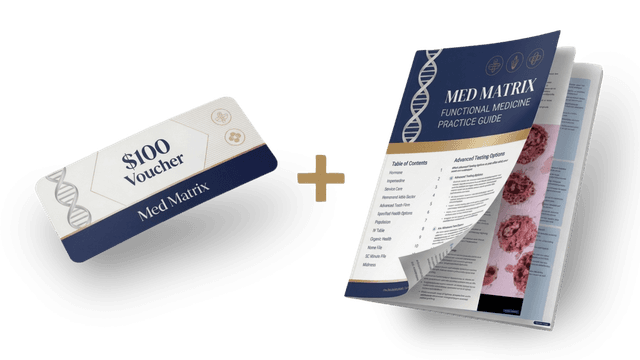
Includes a $100 voucher toward your first visit
Everything you need to make an informed decision: pricing, testing catalog, process timeline, provider bios, and real patient stories. No commitment required.

Free Practice Guide + $100 Voucher
Everything you need before your first visit
STEP 1 OF 3
Where can we send your practice guide?
Enter your email to get instant access
We only accept a limited number of patients per week
EXPLORE
Related Content
Articles, patient stories, and podcast episodes about lyme disease treatment.

FAQ
Lyme Disease Treatment FAQ
Yes. Standard Western blot and ELISA tests detect antibodies, not the bacteria itself. Borrelia burgdorferi (the Lyme bacteria) uses multiple strategies to hide from your immune system. If your immune system can't see the bacteria, it doesn't produce antibodies, and the test comes back negative even though the infection is active. This is well documented in the infectious disease literature. The gold standard test is FISH (fluorescent microscopy), which looks at the bacteria directly under a microscope. It requires a Lyme-literate provider to order.
Co-infections are separate infections transmitted by the same tick that gave you Lyme. The most common are Bartonella (a bacterial infection also transmissible by cats and dogs), Babesia (a blood parasite, not a bacteria), and Mycoplasma. Each requires different treatment. Babesia is a parasite, so antibiotics won't touch it. Bartonella needs a different antibiotic approach than Borrelia. A standard Lyme test only checks for one species of Borrelia and misses everything else. Most chronic Lyme patients have co-infections. Missing them is a major reason treatment fails.
For acute Lyme caught early and treated promptly with adequate doxycycline (at least 21 days per ILADS guidelines), most patients recover well. For chronic or late-stage Lyme, treatment is measured in months to years. Recovery is not a straight line. You'll have periods of improvement followed by setbacks, then more improvement. Your provider will set realistic expectations based on how long you've been symptomatic, what co-infections are present, and how your body responds to treatment.
Initial onboarding at Med Matrix runs about $1,200 to $1,500 all-in, covering your 100-biomarker blood panel, InBody body composition scan, provider prep, and one-hour provider visit. FISH testing through specialized labs is expensive and not covered by insurance. Co-infection testing panels are additional. Treatment costs vary depending on your protocol (botanical antimicrobials, pharmaceutical antibiotics, IV therapies, hormone support, supplements). We accept HSA, FSA, CareCredit, and all major cards. New patients get a $100 voucher toward their first visit.
Save the tick. Put it in a sealed bag or container and send it to a PCR testing lab to find out what infections it was carrying. Start doxycycline as soon as possible. The ILADS guidelines support starting antibiotics promptly after a deer tick bite, before waiting for symptoms or test results. Contact a provider who can prescribe it. If the tick tests negative, you can stop the antibiotics. If it tests positive, you need a full treatment course. Don't wait for a bullseye rash. Many Lyme cases never produce one.
No. Antibiotics are one tool, but they're not always the right one or the only one. There's growing research showing antibiotic resistance in Borrelia, where the bacteria can actually strengthen during treatment. We use a combination of approaches depending on the patient: pharmaceutical antibiotics when appropriate, botanical antimicrobials (which studies show can outperform pharmaceuticals against certain tick-borne infections), hormone optimization, nutrient support, gut repair, IV therapies like ozone, and nervous system rehabilitation. Every plan is individualized based on your testing, symptoms, and response to treatment.
Related Services to Lyme Disease Treatment
Your Health, Your Terms
Start Feeling Like Yourself Again
Get your free practice guide and a $100 voucher toward your first visit. No commitment, no pressure.