
Functional Medicine
Heart Health
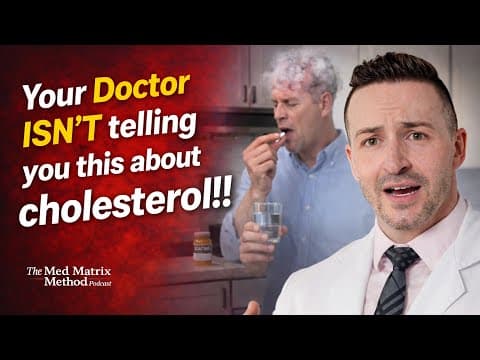
Your cholesterol numbers tell one piece of the story. We test the full picture: particle size, inflammatory markers, insulin resistance, homocysteine, and metabolic function. Most heart disease risk factors are invisible on a standard lipid panel.

Your Cholesterol Number Is Not Your Heart Disease Risk
Every year, millions of people get a standard lipid panel. Their doctor looks at total cholesterol and LDL. If the numbers are above a threshold, they get a statin prescription. If the numbers are below, they're told everything is fine. In either case, nobody explains what the numbers actually mean or whether the patient is genuinely at risk for a cardiovascular event.
That's the system. And it's failing people.
Colin Renaud (DC, PA-C), one of our providers, puts it plainly: "It's not how high is the cholesterol. It's why is the body making or retaining more cholesterol. That's really what we in the functional medicine world are trying to understand."
Here's what the research actually shows. Total cholesterol and LDL alone are poor predictors of cardiovascular disease. People with high LDL can have very low cardiovascular risk if their metabolic health is good. And people with "normal" cholesterol can have a heart attack if insulin resistance, inflammation, and vascular damage are present underneath.
The real drivers of heart disease are not the numbers on a basic lipid panel. They're insulin resistance, chronic inflammation, endothelial damage (the lining inside your blood vessels), and the specific characteristics of your cholesterol particles. A standard panel doesn't test any of these.
Cholesterol itself is not the enemy. Your body needs it. It builds cell membranes, produces hormones (testosterone, estrogen, progesterone, cortisol), synthesizes vitamin D, and supports immune function. Aggressively lowering cholesterol without understanding why it's elevated can create new problems: low energy, brain fog, hormonal imbalance, and reduced stress tolerance.
The right question isn't "how do I get my cholesterol down?" It's "what is my actual cardiovascular risk, and what's driving it?"
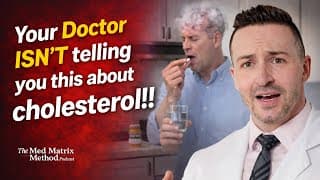
“It's not how high is the cholesterol. It's why is the body making or retaining more cholesterol. That's really what we in the functional medicine world are trying to understand.”
Colin Renaud, DC, PA-C: Why the Body Makes More Cholesterol
Watch at 4:00→“It's not how high is the cholesterol. It's why is the body making or retaining more cholesterol. That's really what we in the functional medicine world are trying to understand.”
Colin Renaud, DC, PA-C: Why the Body Makes More Cholesterol
Provider Insight
Inside Med Matrix
Everything Under One Roof
Advanced testing, personalized protocols, and real results from a team that treats the whole picture.
4.9
from 150+ Google Reviews
What We Actually Test (And What It Tells Us)
A standard lipid panel gives you four numbers: total cholesterol, LDL, HDL, and triglycerides. That's a start. It's not enough.
We run an expanded cardiovascular panel that looks at the markers research has linked most closely to actual heart disease risk.
Apolipoprotein B (ApoB). This is the protein responsible for plaque formation in your arteries. It's a better predictor of cardiovascular events than LDL alone. Two people can have the same LDL number but very different ApoB levels, and therefore very different risks.
Lipoprotein(a), or Lp(a). This is a genetically determined marker that is more closely associated with cardiovascular disease than LDL or total cholesterol. Most conventional doctors never test it. If yours is elevated, it changes how aggressively we approach prevention.
LDL particle size and number. Not all LDL is the same. Small, dense LDL particles are far more likely to contribute to plaque formation than large, buoyant ones. When insulin resistance increases, VLDL production rises and LDL particles get smaller. This is where the real danger lives, and a standard panel misses it entirely.
High-sensitivity CRP (hsCRP). This measures systemic inflammation. Inflammation damages the endothelium (the single-cell lining inside your blood vessels). Damaged endothelium impairs nitric oxide production, which reduces blood flow and creates the conditions for plaque to form. You can have perfect cholesterol and still be at high risk if your inflammatory markers are elevated.
Fasting insulin and HbA1c. Insulin resistance is one of the most common drivers of both high cholesterol and high blood pressure. When insulin function breaks down, sodium retention increases, fluid expands, and blood pressure rises. Meanwhile, VLDL production increases and LDL particles shrink. These two markers catch the problem years before a diabetes diagnosis.
Homocysteine. An amino acid that, when elevated, damages blood vessel walls and increases clotting risk. It's related to B vitamin status and is treatable once identified.
Vitamin D, ferritin, B12. Nutrient deficiencies affect cardiovascular function. Low vitamin D is linked to increased cardiovascular risk. Low B12 and folate allow homocysteine to climb. Low ferritin affects energy and cardiac output.
Thyroid panel and sex hormones. Thyroid dysfunction affects cholesterol metabolism directly. Low testosterone in men is associated with higher cardiovascular risk. Estrogen and progesterone decline in women increases heart disease risk after menopause. These connections are well-established in the research, and almost never tested together in conventional care.
Cardiac calcium score CT scan (when indicated). This imaging study shows whether any plaque has actually formed in your coronary arteries. A score of zero means no plaque, regardless of what your LDL says. It's one of the most useful tools for assessing real cardiovascular risk, and we order it when the clinical picture warrants it.
Prevention Instead of Medication
The conventional approach to cardiovascular risk is medication-first. Cross a threshold on your lipid panel? Statin. Blood pressure too high? Antihypertensive. Insulin elevated? Metformin. Nobody asks why these numbers are where they are, or whether fixing the underlying cause would make the medication unnecessary.
Colin Renaud (DC, PA-C) explains the problem with this system: "One of the biggest things that statins do is they block the production of coenzyme Q10, which is a critical molecule for cellular energy production and muscle function. A lot of doctors might give them the answer, well, it's just aging. And it's like, well, maybe it's not. Maybe it's a side effect of your 80 milligram statin."
Statins also reduce cholesterol synthesis, which means less raw material for hormone production. Testosterone, estrogen, progesterone, cortisol, and vitamin D all depend on cholesterol. Lowering it aggressively can produce fatigue, brain fog, low libido, mood problems, and poor stress tolerance. And here's the part that matters most: statins may actually worsen insulin resistance. The very thing driving the cholesterol problem in the first place.
We take a different approach. We identify what's actually driving cardiovascular risk in your body and address it directly.
Metabolic health first. If insulin resistance is present (and it usually is), that's the priority. Dietary changes, body composition improvement, sometimes GLP-1 medications. Fixing insulin function improves cholesterol numbers, lowers blood pressure, reduces inflammation, and reduces vascular damage. One intervention, multiple downstream improvements.
Inflammation reduction. We find and address the sources: gut dysfunction, food sensitivities, chronic stress, poor sleep, environmental exposures. Lowering inflammation protects the endothelium and reduces the conditions under which cholesterol becomes a problem.
Hormone optimization. Optimizing testosterone, thyroid, and sex hormones improves metabolic function, body composition, energy, and mood. These factors all contribute to cardiovascular health. A man with optimized testosterone has better metabolic health, better body composition, and lower long-term cardiovascular risk.
Nutrient repletion. Correcting vitamin D, B12, magnesium, and CoQ10 deficiencies. For patients on statins, CoQ10 supplementation is often necessary to replace what the medication depletes.
Lifestyle as medicine. Resistance training, adequate protein, sleep optimization, and stress management. These are not nice-to-haves. They are treatment. A patient who lifts weights four times a week, sleeps seven to nine hours, manages stress, and eats real food has a fundamentally different cardiovascular risk profile than someone who doesn't, regardless of their cholesterol number.
For patients who are currently on statins, we don't pull them off on day one. We work with their primary care doctor, address the root causes, improve their metabolic health, and then have the conversation about whether the statin is still needed. Many patients have been able to reduce or discontinue medications after their underlying health improved.
Colin Renaud (DC, PA-C) has seen it firsthand: "I've reversed diabetes I don't know how many times. How many patients have told me, my doctor said diabetes is not reversible. Well, that's not accurate. I've reversed it many times." When the metabolic dysfunction reverses, the downstream risk factors improve with it.
We've treated over 3,000 patients at Med Matrix with a 4.9-star rating across 150+ Google reviews. 7 providers working together to look at the full picture. If your doctor put you on a statin without explaining why your cholesterol was high in the first place, we can help you find out.
Free Resource
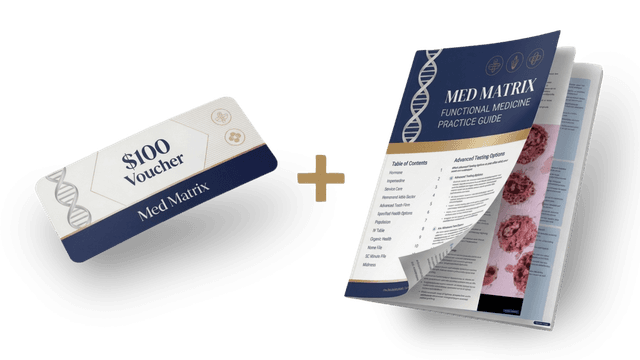
Get Your Free Practice Guide
Includes a $100 voucher toward your first visit
Everything you need to make an informed decision: pricing, testing catalog, process timeline, provider bios, and real patient stories. No commitment required.
Free Practice Guide + $100 Voucher
Everything you need before your first visit
STEP 1 OF 3
Where can we send your practice guide?
Enter your email to get instant access
We only accept a limited number of patients per week
EXPLORE
Related Content
Articles, patient stories, and podcast episodes about heart health.

FAQ
Heart Health FAQ
Not necessarily. Total cholesterol and LDL alone are poor predictors of cardiovascular events. Your actual risk depends on factors like insulin resistance, inflammation, LDL particle size, ApoB levels, Lp(a), and the health of your blood vessel lining. A person with high LDL but excellent metabolic health may have very low risk. A person with 'normal' cholesterol but insulin resistance and inflammation may be in real danger. We test the full picture so you know your actual risk, not just a number.
Don't stop any medication without talking to your prescribing doctor. What we do is identify and treat the root causes driving your cholesterol and cardiovascular risk. As your metabolic health, inflammation, and hormone levels improve, your provider can work with your primary care doctor to reassess whether the statin is still needed. Many patients have been able to reduce or stop statins after the underlying dysfunction was addressed. But it's a process, not a snap decision.
It's a CT scan that measures the amount of calcified plaque in your coronary arteries. A score of zero means no detectable plaque formation. It's one of the most meaningful tests for assessing actual cardiovascular risk because it shows what's physically happening in your arteries, not just what your blood chemistry suggests. We order it when the clinical picture calls for it, especially for patients with elevated cholesterol but unclear overall risk.
Most cardiologists focus on managing lab numbers with medication. If cholesterol is high, prescribe a statin. If blood pressure is high, prescribe an antihypertensive. That approach manages the numbers but rarely addresses why those numbers are elevated. We look at the metabolic, hormonal, inflammatory, and lifestyle factors driving cardiovascular risk and treat those directly. The goal is to fix the cause, not just manage the result.
Initial onboarding runs about $1,200 to $1,500 all-in. That covers a 100-biomarker blood panel (including the expanded cardiovascular markers described above), an InBody 770 body composition scan, provider prep time, and your full one-hour provider visit. Follow-up visits are $275. A cardiac calcium score CT scan is ordered separately when indicated and typically costs $75 to $200 through imaging centers. We accept HSA, FSA, CareCredit, and all major cards. New patients get a $100 voucher toward their first visit.
Yes. High blood pressure is often driven by insulin resistance, which causes sodium retention and fluid expansion. It can also be driven by chronic stress, poor sleep, hormonal imbalance, and inflammation. We test for all of these and build a treatment plan around what's actually causing your blood pressure to be elevated. As the root causes improve, many patients see their blood pressure normalize and can work with their doctor to reduce or discontinue medication. It's the same principle as statins: treat the cause, not just the number.
Related Services to Heart Health
Your Health, Your Terms
Start Feeling Like Yourself Again
Get your free practice guide and a $100 voucher toward your first visit. No commitment, no pressure.