
Functional Medicine
Autoimmune Diseases
Autoimmune conditions don't come from nowhere. Something triggered your immune system to turn on itself. We find that trigger. Conventional medicine manages symptoms with immunosuppressants. We look upstream at gut health, infections, toxins, stress, and hormones to find what started it.

Why Autoimmune Conditions Get Missed for Years
Autoimmune disease happens when your immune system starts attacking your own tissue. It can hit your thyroid (Hashimoto's, Graves disease), your joints (rheumatoid arthritis), your gut (Crohn's, ulcerative colitis), your connective tissue, your skin, your nervous system. There are over 80 recognized autoimmune conditions, and most of them share a frustrating pattern: they take years to diagnose.
The average autoimmune patient sees four to five doctors over a span of four or more years before getting a diagnosis. That's years of being told nothing is wrong. Years of symptoms getting worse while your labs come back "normal." Years of being told it's stress, it's aging, it's in your head.
Here's why it takes so long. Conventional medicine is built around specialties. Your thyroid goes to an endocrinologist. Your joints go to a rheumatologist. Your gut goes to a gastroenterologist. But autoimmune disease doesn't stay in one lane. It's systemic. It crosses every organ system. And when you have fatigue, joint pain, brain fog, gut issues, and skin problems all at once, each specialist looks at their piece and says it's not their department. Nobody puts the picture together.
The other problem is testing. Most primary care doctors don't run autoimmune markers unless you specifically ask. Thyroid antibodies, ANA panels, inflammatory markers like CRP and ESR, specific antibody testing for conditions like lupus or celiac. These tests exist. They're not expensive. They're just not part of a standard panel. So conditions like Hashimoto's (the most common autoimmune disease in the country) go undiagnosed for years because the doctor only checks TSH and calls the thyroid "fine."
We hear this story constantly. Laura, one of our patients, asked her primary care to test her for Hashimoto's. They refused. Her first lab review at Med Matrix revealed it plain as day. Victoria came in with Graves disease, dermatomyositis, type 1 diabetes, and connective tissue disease. Her conventional doctors had her on heavy prescription medications with significant side effects, but nobody looked at root causes. She couldn't get off the couch most days.
“Trauma and the mind-body connection is not a psychological experience. It's really a physiological imprint.”
Colin Renaud, DC, PA-C: Trauma Creates a Physiological Imprint
Provider Insight
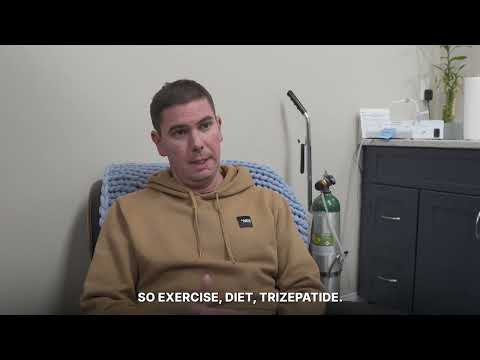
“It was looking at more of the root cause, not just treating symptoms. That wasn't working for my symptoms with normal medical doctors.”
Victoria: Root Cause, Not Just Symptom Management
Patient Story
“It was looking at more of the root cause, not just treating symptoms. That wasn't working for my symptoms with normal medical doctors.”
Victoria: Root Cause, Not Just Symptom Management
Patient Story
“There were things on there that I hadn't known. For example, Hashimoto's disease. I had asked my physician to test me for that and they didn't. And that did come up on there.”
Laura: Hashimoto's Discovered After Years of Being Dismissed
Patient Story
Inside Med Matrix
Everything Under One Roof
Advanced testing, personalized protocols, and real results from a team that treats the whole picture.

4.9
from 150+ Google Reviews
The Gut-Immune Connection
About 70 to 80 percent of your immune system lives in your gut. That's not a metaphor. The tissue lining your intestines contains the highest concentration of immune cells in your body. When your gut barrier breaks down (what's called intestinal permeability or "leaky gut"), proteins and bacteria that should stay inside your digestive tract leak into your bloodstream. Your immune system reacts. If this goes on long enough, that reaction can become chronic and start targeting your own tissue.
This is why so many autoimmune patients also have gut symptoms. Bloating, constipation, diarrhea, food sensitivities. It's not a coincidence. The gut dysfunction and the immune dysfunction are connected.
Common triggers we test for and address:
- Gut permeability and dysbiosis. Imbalanced gut bacteria, overgrowth of inflammatory species, breakdown of the intestinal lining. We use advanced stool testing and targeted protocols to rebuild gut health.
- Hidden infections. Lyme disease and co-infections, Epstein-Barr virus, other chronic infections can trigger and sustain autoimmune responses. These are almost never tested for in conventional settings.
- Toxin exposure. Mold, heavy metals, pesticides, and endocrine disruptors can push a susceptible immune system over the edge. We assess exposure history and test when indicated.
- Chronic stress and cortisol dysfunction. Long-term stress rewires the nervous system and burns out the adrenal glands. Low cortisol leads to an immune system that's no longer properly regulated. Research supports a direct link between trauma, adverse childhood experiences, and higher rates of autoimmune disease in adulthood.
- Hormonal imbalance. Estrogen, testosterone, and thyroid hormones all influence immune function. Autoimmune conditions disproportionately affect women, and flares often coincide with hormonal shifts (postpartum, perimenopause, menopause).
- Nutrient deficiencies. Low vitamin D, zinc, magnesium, and selenium impair immune regulation. These are simple to test and simple to fix, but they have to be found first.
Colin Renaud (DC, PA-C), one of our providers, puts it this way: trauma and chronic stress create a physiological imprint on the nervous system. When you're in constant fight-or-flight mode, the body starts recognizing its own tissue as foreign. That's not a fringe theory. Research on adverse childhood experiences and autoimmune disease supports this connection directly.

“Trauma and the mind-body connection is not a psychological experience. It's really a physiological imprint.”
Colin Renaud, DC, PA-C: Trauma Creates a Physiological Imprint
Watch at 27:00→
“It was looking at more of the root cause, not just treating symptoms. That wasn't working for my symptoms with normal medical doctors.”
Victoria: Root Cause, Not Just Symptom Management
Watch at 1:00→How Med Matrix Tests and Treats Autoimmune Conditions
We don't start with a diagnosis code and work backward. We start with a full picture of what's happening in your body right now.
Your first visit is a 30-minute testing appointment. We draw a panel of roughly 100 biomarkers and run a full InBody 770 body composition scan. For autoimmune patients, we're looking at everything your other doctors didn't check.
What we test:
- Full thyroid panel (TSH, free T3, free T4, reverse T3, thyroid antibodies for Hashimoto's and Graves)
- Inflammatory markers (CRP, ESR)
- Sex hormones (estrogen, progesterone, testosterone, DHEA)
- Cortisol and adrenal markers
- Metabolic health (fasting insulin, glucose, HbA1c)
- Nutrient levels (vitamin D, B12, ferritin, magnesium, zinc, selenium)
- Body composition (lean mass, visceral fat, hydration)
When indicated, we also run advanced stool testing to evaluate gut microbiome health, intestinal permeability markers, and immune markers in the gut. For patients with suspected Lyme or other chronic infections, we use specialized testing beyond the standard Western blot (which misses a significant percentage of real infections).
One of our 7 providers reviews your full panel, your health history, your medications, and your symptom timeline before you sit down for a one-hour visit. You go through every result together. No rushing. No 10-minute time limit. You leave with a plan that addresses the triggers driving your immune dysfunction, not just the symptoms it produces.
Treatment plans for autoimmune patients often include multiple layers. Gut repair protocols. Targeted supplementation to fill nutrient gaps. Hormone optimization if levels are off. Dietary changes to reduce inflammatory triggers. Stress management and nervous system support. For some patients, peptides like Thymosin Alpha-1 (which modulates T-cell activity) or BPC-157 (which repairs gut lining) become part of the protocol. Everything is individualized. Two patients with Hashimoto's might have completely different root causes and completely different plans.
Real Patients, Real Results
Victoria has multiple autoimmune conditions: dermatomyositis, type 1 diabetes, Graves disease, and connective tissue disease. Before Med Matrix, she was on heavy prescription medications with difficult side effects. Some days she couldn't get off the couch. Quality of life was, in her words, "pretty bad."
Through functional medicine, dietary changes, and targeted supplements, her Graves disease thyroid levels returned to normal in roughly five months. Her joint pain improved significantly. Her fatigue lifted. She describes her quality of life as nearly back to what it was before she got sick. And the cost? She noted it's basically what you'd pay at a regular doctor for co-pays, and the supplements are effective with low side effects.
Laura came to Med Matrix wanting to get off pharmaceuticals. She had high cholesterol, thyroid issues, and persistent fatigue. She'd asked her primary care to test for Hashimoto's. They refused. Her first lab review here revealed Hashimoto's disease. She transitioned to natural thyroid support and targeted supplements. The fatigue lifted. She felt better than she had in years. Her response: "There were things on there that I hadn't known. For example, Hashimoto's disease. I had asked my physician to test me for that and they didn't."
These aren't exceptions. We've treated over 3,000 patients at Med Matrix with a 4.9-star rating across 150+ Google reviews. 7 providers working together, not constrained by insurance. If you've been bouncing between specialists for years without answers, this is the kind of care that puts the pieces together.
“It was looking at more of the root cause, not just treating symptoms. That wasn't working for my symptoms with normal medical doctors.”
Victoria: Root Cause, Not Just Symptom Management
Watch at 1:00→
“There were things on there that I hadn't known. For example, Hashimoto's disease. I had asked my physician to test me for that and they didn't. And that did come up on there.”
Laura: Hashimoto's Discovered After Years of Being Dismissed
Watch at 1:00→Free Resource
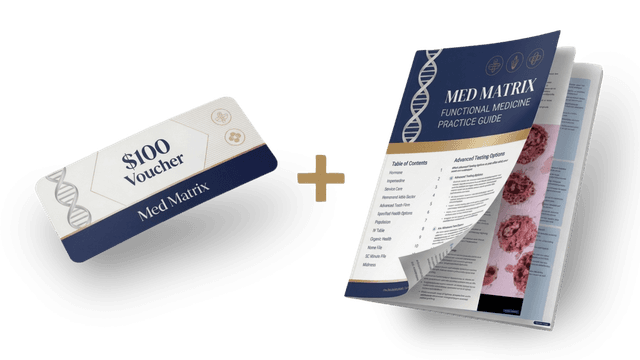
Get Your Free Practice Guide
Includes a $100 voucher toward your first visit
Everything you need to make an informed decision: pricing, testing catalog, process timeline, provider bios, and real patient stories. No commitment required.

Free Practice Guide + $100 Voucher
Everything you need before your first visit
STEP 1 OF 3
Where can we send your practice guide?
Enter your email to get instant access
We only accept a limited number of patients per week
EXPLORE
Related Content
Articles, patient stories, and podcast episodes about autoimmune diseases.
FAQ
Autoimmune Diseases FAQ
We work with patients across the full spectrum of autoimmune disease. Hashimoto's thyroiditis, Graves disease, rheumatoid arthritis, lupus, Crohn's disease, ulcerative colitis, psoriasis, multiple sclerosis, dermatomyositis, connective tissue disease, POTS, mast cell activation syndrome (MCAS), celiac disease, and others. We don't treat the diagnosis in isolation. We look at the underlying triggers (gut health, infections, toxins, stress, hormones, nutrients) that are driving the immune response and address those.
A rheumatologist focuses on managing autoimmune symptoms, usually with immunosuppressant medications. That can be necessary and we don't tell patients to stop working with their rheumatologist. But immunosuppressants don't address why your immune system started attacking your own tissue. We look upstream at the triggers: gut dysfunction, chronic infections, toxin exposure, hormonal imbalance, nutrient deficiencies, and chronic stress. Addressing those can reduce flare frequency and severity, sometimes dramatically. Many patients find they can reduce their medication load over time under their specialist's supervision.
We assess dietary triggers as part of the evaluation, and for some patients we use elimination protocols or advanced stool testing to identify inflammatory foods. The standard IgG food sensitivity panels you see marketed online have mixed reliability. We prefer a combination of gut health testing, elimination diets, and symptom tracking to identify what's actually driving inflammation in your specific case. Your provider will recommend the best approach based on your symptoms and lab results.
Initial onboarding runs about $1,200 to $1,500 all-in. That covers your 100-biomarker blood panel, InBody 770 body composition scan, provider prep time, and your full one-hour provider visit. Follow-up visits are $275. If advanced testing is needed (stool testing, DUTCH test, or Lyme panels), there are additional costs your provider will discuss with you. We accept HSA, FSA, CareCredit, and all major cards. New patients get a $100 voucher toward their first visit.
Yes. Many of our autoimmune patients come in already taking medications prescribed by their rheumatologist or specialist. We work alongside those treatments, not against them. Our goal is to address the root triggers so your immune system calms down on its own over time. As that happens, some patients are able to reduce their medications with their prescribing doctor's guidance. We don't tell anyone to stop a medication. That decision is between you and the doctor who prescribed it.
Autoimmune conditions took years to develop, so recovery is measured in months, not days. Many patients notice initial improvements in energy, sleep, or gut symptoms within the first one to three months. Deeper changes in inflammatory markers and flare frequency tend to build over three to six months. Victoria, one of our patients with Graves disease, saw her thyroid levels return to normal in about five months. Your provider will set realistic expectations based on your specific situation and track progress with lab work along the way.
Related Services to Autoimmune Diseases
Your Health, Your Terms
Start Feeling Like Yourself Again
Get your free practice guide and a $100 voucher toward your first visit. No commitment, no pressure.