
Functional Medicine
Hair Loss Treatment
Hair loss isn't just cosmetic. It's a signal. Low thyroid, hormone imbalances, nutrient deficiencies, inflammation, and stress all show up in your hair first. We test for the cause, not just the symptom, and build a protocol that addresses both.
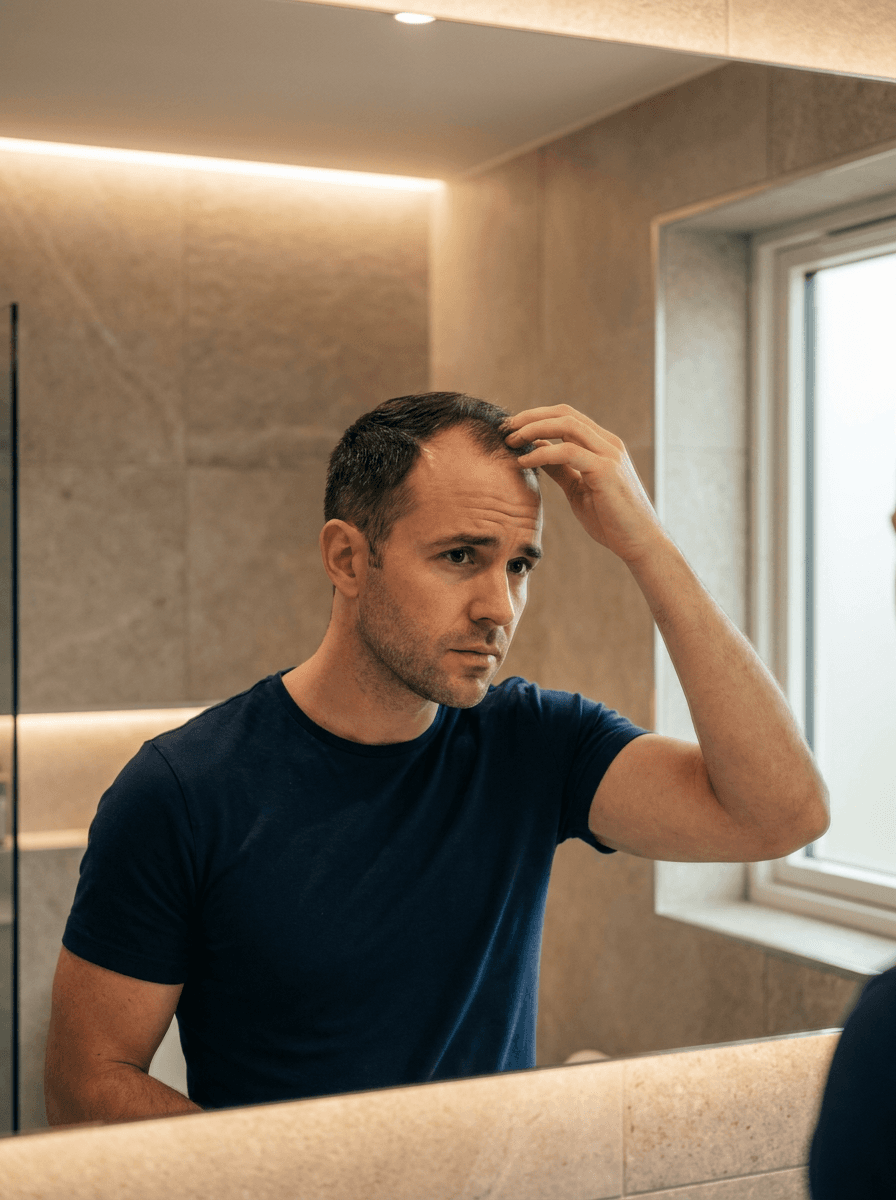
Why Hair Falls Out (And Why Nobody Tells You the Real Reason)
You notice more hair in the shower drain. Your ponytail feels thinner. Your part is wider than it was a year ago. Maybe your barber mentioned it. Maybe you've been avoiding mirrors. Either way, something changed and it's getting worse.
So you go to your doctor. They might run a thyroid test (just TSH) and say it's normal. They might shrug and say it's genetic. They might hand you a minoxidil prescription and send you home. And the hair keeps falling out.
Here's what they're missing. Hair loss is almost never caused by one thing. It's usually a combination of factors working together, and most doctors only check one or two of them. The most common internal drivers of hair loss include:
- Thyroid dysfunction: Even a mildly sluggish thyroid (missed by standard TSH-only testing) can cause diffuse hair thinning. Without checking free T3, free T4, reverse T3, and thyroid antibodies, your doctor can't rule this out.
- Low ferritin: Iron storage levels below 40 are associated with increased hair shedding, even if your hemoglobin is "normal." Most doctors don't check ferritin unless you're anemic.
- Hormone shifts: Declining estrogen and progesterone in women. Low testosterone in men. Elevated DHT (a testosterone metabolite) in both. These hormonal changes directly affect the hair growth cycle.
- Nutrient deficiencies: Vitamin D, zinc, B12, and biotin all play roles in hair follicle health. Deficiencies are common and rarely tested.
- Chronic stress and cortisol: Prolonged stress pushes hair follicles into the resting phase prematurely. This is called telogen effluvium, and it can cause dramatic shedding that looks permanent but often isn't.
- Autoimmune conditions: Hashimoto's thyroiditis, alopecia areata, and other autoimmune conditions directly attack hair follicles or the glands that regulate hair growth.
- Inflammation: Systemic inflammation from gut issues, food sensitivities, or metabolic dysfunction can disrupt the hair growth cycle and accelerate loss.
When your doctor only checks one box, they miss most of this. That's not a flaw in your doctor. It's a flaw in the system. Insurance-based visits don't leave time or budget for thorough testing. So the real cause goes undiagnosed, and your hair keeps thinning.
“These glands have a complex relationship with each other. In conventional medicine there's this idea that the thyroid is off on an island, the adrenal glands are off by themselves, and the ovaries are separate. All of these hormones are in the blood together.”
Dr. Rose: The Hormonal Triangle
Provider Insight
“If we are catching hormone decline early, 100% it should be caught early and dealt with early. We see decline in hormones in men in their 30s. We see perimenopausal shift in women in their 30s.”
Colin Renaud, PA-C and Dr. Rose: Catching Hormone Decline Early
Provider Insight
“I was so anxious that I was really looking at getting on an anxiety medication, and then I know now that that was a function of my hormones. I don't feel like that anymore. I feel great.”
Cat: Anxiety Resolved Through Hormone Balance
Patient Story
“My old level was really probably closer to my baseline. And if you take that and cut it in half, even though my half was still in what medical professionals say is an acceptable range, that's not necessarily what's acceptable for my body.”
Ryan: Why 'Normal Range' Wasn't Normal for Him
Patient Story
“I wake up and not feel that, you're like, 'Wow.' My quality of life is completely different.”
Caleb: Quality of Life Completely Changed
Patient Story
“Most providers are running labs based on the medications they can give. If your medication only requires monitoring TSH, they don't care what the rest of the thyroid panel looks like.”
Colin Renaud, DC, PA-C: Providers Test Based on Medications, Not You
Provider Insight
“There were things on there that I hadn't known. For example, Hashimoto's disease. I had asked my physician to test me for that and they didn't. And that did come up on there.”
Laura: Hashimoto's Discovered After Years of Being Dismissed
Patient Story
Inside Med Matrix
Everything Under One Roof
Advanced testing, personalized protocols, and real results from a team that treats the whole picture.

4.9
from 150+ Google Reviews
How We Test for Hair Loss at Med Matrix
We start with a 100-biomarker blood panel and an InBody 770 body composition scan. This is the same foundation every Med Matrix patient gets, and it's designed to catch what conventional testing misses.
For hair loss specifically, we're looking at:
- Full thyroid panel (TSH, free T3, free T4, reverse T3, thyroid antibodies)
- Ferritin and iron studies (not just hemoglobin)
- Sex hormones (estrogen, progesterone, testosterone, DHEA, DHT when indicated)
- Cortisol and adrenal markers
- Vitamin D, zinc, B12, folate, magnesium
- Inflammatory markers (CRP, ESR)
- Metabolic panel (fasting insulin, glucose, HbA1c)
- Autoimmune markers when clinical suspicion warrants
After your labs come back, your provider spends time reviewing every result alongside your health history, the pattern of your hair loss (diffuse thinning vs. patchy vs. receding), when it started, what you've already tried, and your overall health picture. Then you sit down for a one-hour visit where you go through everything together.
Most hair loss patients who come to us have already been told "it's just genetics" or "there's nothing we can do." And in almost every case, the blood work tells a different story. There's a correctable deficiency, a hormonal imbalance, a thyroid issue flying under the radar, or chronic inflammation that nobody looked for.
Treatment Options for Hair Restoration
Your treatment plan is built around what your labs actually show. There is no standard hair loss protocol here. The plan depends entirely on your specific drivers.
Hormone optimization. If low or imbalanced hormones are contributing, we address them directly. For women, that might mean balancing estrogen, progesterone, and testosterone. For men, testosterone replacement or DHT management. Bioidentical hormones are customized to your lab results and adjusted over time.
Thyroid correction. If your thyroid is undertreated or undiagnosed (common with Hashimoto's), we optimize thyroid levels using a combination of medication, lifestyle changes, and targeted supplements. Hair regrowth from thyroid correction alone can be significant.
Nutrient repletion. Low ferritin, vitamin D, zinc, and B12 are some of the most treatable causes of hair loss. We use targeted supplementation to bring levels into optimal range, not just "normal" range. The difference matters.
PRP therapy (platelet-rich plasma). PRP uses your own blood platelets, concentrated and injected into the scalp, to stimulate dormant hair follicles. It works best when combined with internal optimization because the growth factors in PRP are more effective when your hormones, nutrients, and inflammation are all addressed.
Peptide therapy. Specific peptides can support hair growth by improving blood flow to the scalp, reducing local inflammation, and stimulating follicle regeneration. These are prescribed based on your individual situation and response to treatment.
Stress and cortisol management. If telogen effluvium (stress-related shedding) is part of your picture, we address the cortisol imbalance directly. This may involve adrenal support, lifestyle adjustments, and in some cases, specific supplements that help regulate the stress response.
Most patients receive a combination of two or more of these approaches. The key is that every element of the plan is based on what your labs and your body are actually telling us. Nothing is guesswork.
The Med Matrix Process
How It Works
Your path to feeling like yourself again, step by step.
Discovery Call
Free consultation
Biomarker Test
80+ markers
Team Review
Full analysis
Consultation
60 minutes
Ongoing Support
Continuous care
Free Discovery Call
- Talk with our patient coordinator about your goals, symptoms, and concerns
- Understand your options and what to expect
- Get matched with the right provider for your needs
Result: A clear next step personalized to your situation, with no pressure or commitment.
80+ Biomarker Test & Full Body Scan
- Comprehensive panel of 80+ lab markers
- Full body composition scan
- In-depth health questionnaires
Result: A complete picture of your health, so nothing gets missed.
Medical Team Reviews Everything
- Providers review your labs, medical history, and questionnaires
- Cross-reference symptoms with biomarker patterns
- Identify root causes, not just surface symptoms
Result: A personalized treatment plan built from real data, not guesswork.
60-Minute Provider Consultation
- Sit down with your provider for a full hour
- Go over every result in detail
- Build your personalized plan together
Result: You leave with a clear understanding of what is happening and exactly what to do about it.
Ongoing Support & Progress
- Continued monitoring of your labs and markers
- Adjustments to your plan as your body responds
- Direct access to your care team
Result: Real, measurable progress you can feel and see in your numbers.
Free Resource
Get Your Free Practice Guide
Includes a $100 voucher toward your first visit
Everything you need to make an informed decision: pricing, testing catalog, process timeline, provider bios, and real patient stories. No commitment required.
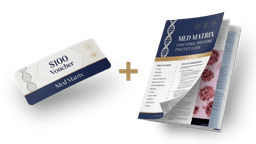
Free Practice Guide + $100 Voucher
Everything you need before your first visit
STEP 1 OF 3
Where can we send your practice guide?
Enter your email to get instant access
We only accept a limited number of patients per week
EXPLORE
Related Content
Articles, patient stories, and podcast episodes about hair loss treatment.


FAQ
Hair Loss Treatment FAQ
Hair loss is almost never caused by one thing. The most common internal drivers include thyroid dysfunction (especially undertested conditions like Hashimoto's), low ferritin, hormone imbalances (declining estrogen/progesterone in women, low testosterone or elevated DHT in men), nutrient deficiencies (vitamin D, zinc, B12), chronic stress and elevated cortisol, autoimmune conditions, and systemic inflammation. Most doctors check one or two of these. We check all of them.
Most dermatologists focus on topical treatments (minoxidil, finasteride) and external procedures. They rarely run blood work beyond a basic panel, and when they do, they use standard reference ranges that miss subtle deficiencies. We start with 100 biomarkers of blood work to identify every internal driver of your hair loss, then build a plan that addresses the cause from the inside while also treating the hair and scalp directly.
Initial onboarding is about $1,200 to $1,500 all-in, covering your blood panel, body composition scan, provider prep time, and your full one-hour provider visit. Follow-up visits are $275. PRP sessions, peptide therapy, and supplements are priced separately based on your specific protocol. We accept HSA, FSA, CareCredit, and all major cards. New patients get a $100 voucher toward their first visit.
Most patients notice reduced shedding within one to two months. Early regrowth (baby hairs, increased density) typically appears at two to three months. More visible improvement builds over four to six months. Full results can take up to a year depending on how long the loss has been progressing and how many drivers are involved. We recheck labs at 10 weeks and adjust your plan at 12 weeks to make sure you're on track.
PRP can be effective, but it works best when the internal drivers of hair loss are addressed at the same time. Injecting growth factors into a scalp that's starved of nutrients, flooded with cortisol, or affected by untreated thyroid dysfunction will produce limited results. That's why we optimize your internal environment first. When hormones, nutrients, and inflammation are all in the right range, PRP has a much better chance of stimulating lasting regrowth.
Yes. Women's hair loss is driven by different hormonal patterns than men's. Declining estrogen and progesterone during perimenopause and menopause, iron deficiency (especially in women who menstruate), thyroid dysfunction (which affects women at much higher rates than men), and postpartum hormonal shifts are all common causes. We test for all of these and build a protocol specifically designed for female hair loss patterns.
Related Services to Hair Loss Treatment
Your Health, Your Terms
Start Feeling Like Yourself Again
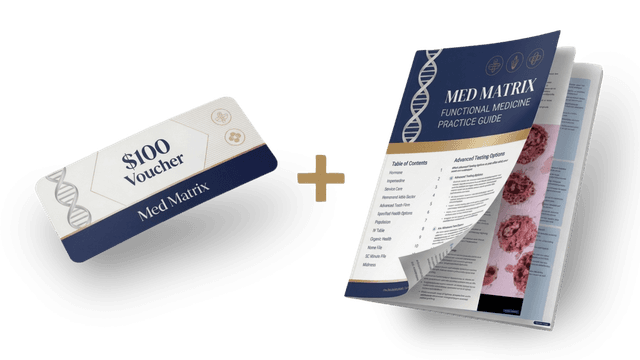
Get your free practice guide and a $100 voucher toward your first visit. No commitment, no pressure.