
Tirzepatide Dosage Chart: Complete Guide to Dose Titration
If your provider has prescribed tirzepatide or you are researching the medication, the dosing schedule is one of the first things you want to understand. Tirzepatide uses a step-up approach called dose titration, starting low and increasing gradually to reduce side effects and find your effective dose.
Here is the complete tirzepatide dosage chart, what to expect at each level, and how providers at Med Matrix adjust the protocol based on your labs and response.
Tirzepatide Dosage Chart
Tirzepatide is injected subcutaneously once per week. The standard titration schedule:
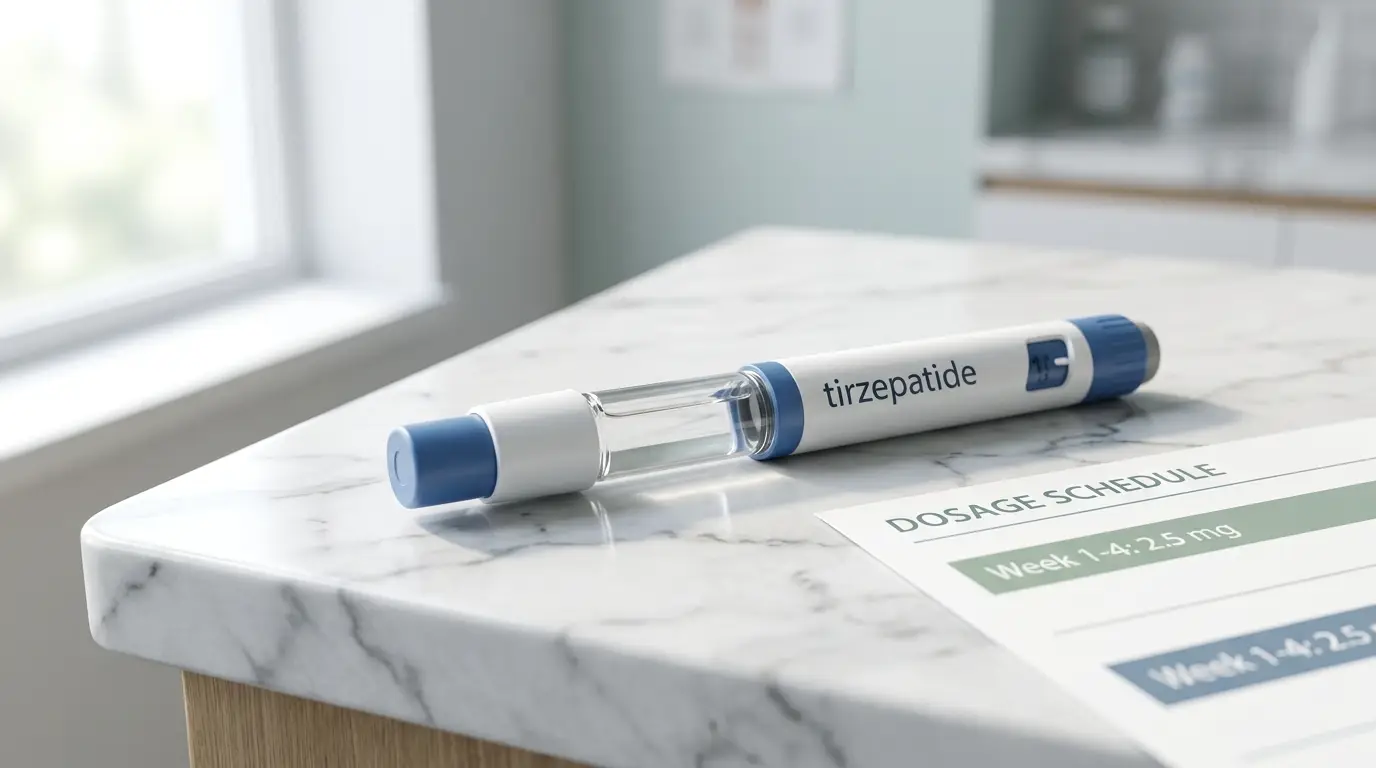
- Weeks 1-4: 2.5 mg weekly (starting dose, not therapeutic, lets your body adjust)
- Weeks 5-8: 5 mg weekly (first therapeutic dose, most patients notice appetite changes here)
- Weeks 9-12: 7.5 mg weekly
- Weeks 13-16: 10 mg weekly
- Weeks 17-20: 12.5 mg weekly
- Week 21+: 15 mg weekly (maximum dose)
Each step lasts a minimum of 4 weeks. Your provider may hold you at a dose longer if side effects need time to resolve or if your labs indicate the current level is working well.
What to Expect at Each Dose
2.5 mg (weeks 1-4)
This is not meant to produce significant weight loss. It is an adjustment period. Some patients notice mild appetite reduction. Others feel no difference. GI side effects (nausea, mild stomach discomfort) are most likely to appear here, though they are usually mild at this dose.
5 mg (weeks 5-8)
The first therapeutic dose. Most patients notice a clear shift in appetite. Food noise quiets down. Portions naturally shrink. Weight loss typically starts becoming measurable. Nausea may increase temporarily as your body adjusts to the higher level.
7.5 mg through 15 mg
Each increase deepens the metabolic effect. Appetite suppression strengthens. Blood sugar and insulin markers continue to improve. The SURMOUNT trials showed that higher doses produced greater weight loss, with the 15 mg group losing up to 22.5% of body weight over 72 weeks.
Not every patient needs to reach 15 mg. Some find their effective dose at 10 mg or 12.5 mg. Your provider decides based on your weight trend, lab results, side effect profile, and body composition changes.
Compounded Tirzepatide Dosing
Compounded tirzepatide from 503B-registered pharmacies may use different formulations (such as tirzepatide sodium). Dosing principles are the same: start low, titrate up, give your body time to adjust at each level.
The key difference is that compounded versions may come in vials requiring manual dose measurement rather than pre-filled pens. Your provider or pharmacist will show you how to draw and inject the correct amount. For more on compounded vs brand-name options, read our tirzepatide peptide guide.
Injection Sites and Timing
Where to inject
Tirzepatide is injected into the fatty tissue just under the skin. The three approved sites:
- Abdomen (at least 2 inches from the navel)
- Front of the thigh
- Back of the upper arm (may need help reaching)
Rotate sites each week to prevent irritation. Do not inject into the same spot two weeks in a row.
When to inject
Take tirzepatide on the same day each week. There is no requirement to take it at a specific time of day, with food, or on an empty stomach. Consistency matters more than timing.
If you miss a dose, take it within 4 days. If more than 4 days have passed, skip that dose and resume your normal schedule the following week.
When Your Provider May Adjust the Schedule
The standard 4-week titration works for most patients, but your provider may modify it based on:
- Persistent nausea: Hold at the current dose for an additional 2-4 weeks before increasing
- Strong response at a lower dose: No need to increase if weight is trending well and labs are improving
- Lab changes: Shifts in thyroid, pancreatic enzymes, or nutrient levels may prompt a pause or dose adjustment
- Body composition: If you are losing muscle mass alongside fat (tracked by InBody scans), your provider may slow the titration and adjust nutrition
At Med Matrix, every dose change is informed by lab data and body composition tracking, not a calendar. This is the difference between a protocol and a prescription.
Tirzepatide vs Semaglutide Dosing
The dosing schedules are different and not interchangeable:
- Tirzepatide: 2.5 mg → 5 mg → 7.5 mg → 10 mg → 12.5 mg → 15 mg (max)
- Semaglutide: 0.25 mg → 0.5 mg → 1 mg → 1.7 mg → 2.4 mg (max)
The numbers are not comparable. 5 mg of tirzepatide is not equivalent to 5 mg of semaglutide. If you are switching from semaglutide to tirzepatide, your provider will restart at 2.5 mg regardless of your previous semaglutide dose. Read our full comparison for more on how the two medications differ.
FAQs
What is the starting dose for tirzepatide?
2.5 mg weekly for the first 4 weeks. This is an adjustment dose, not a therapeutic dose. Most patients start noticing appetite changes at 5 mg.
What is the maximum dose of tirzepatide?
15 mg weekly. Not all patients need the maximum dose. Your provider determines your target based on response, labs, and body composition.
Can I increase my tirzepatide dose faster?
Faster titration increases the risk of nausea and GI side effects. The 4-week minimum at each dose level is designed to let your body adapt. Your provider may extend intervals but should not shorten them without clinical reason.
What happens if I miss a tirzepatide dose?
If within 4 days of your scheduled dose, take it as soon as you remember. If more than 4 days have passed, skip the missed dose and take your next one on the regular day.
Does tirzepatide need to be refrigerated?
Unopened pens should be refrigerated (36-46F). Once in use, tirzepatide pens can be kept at room temperature (up to 86F) for up to 21 days. Do not freeze. Compounded vials may have different storage requirements from your pharmacy.
For side effect management at each dose level, read our side effects guide. When you are ready to start, get your free guide + $100 voucher and book a discovery call.